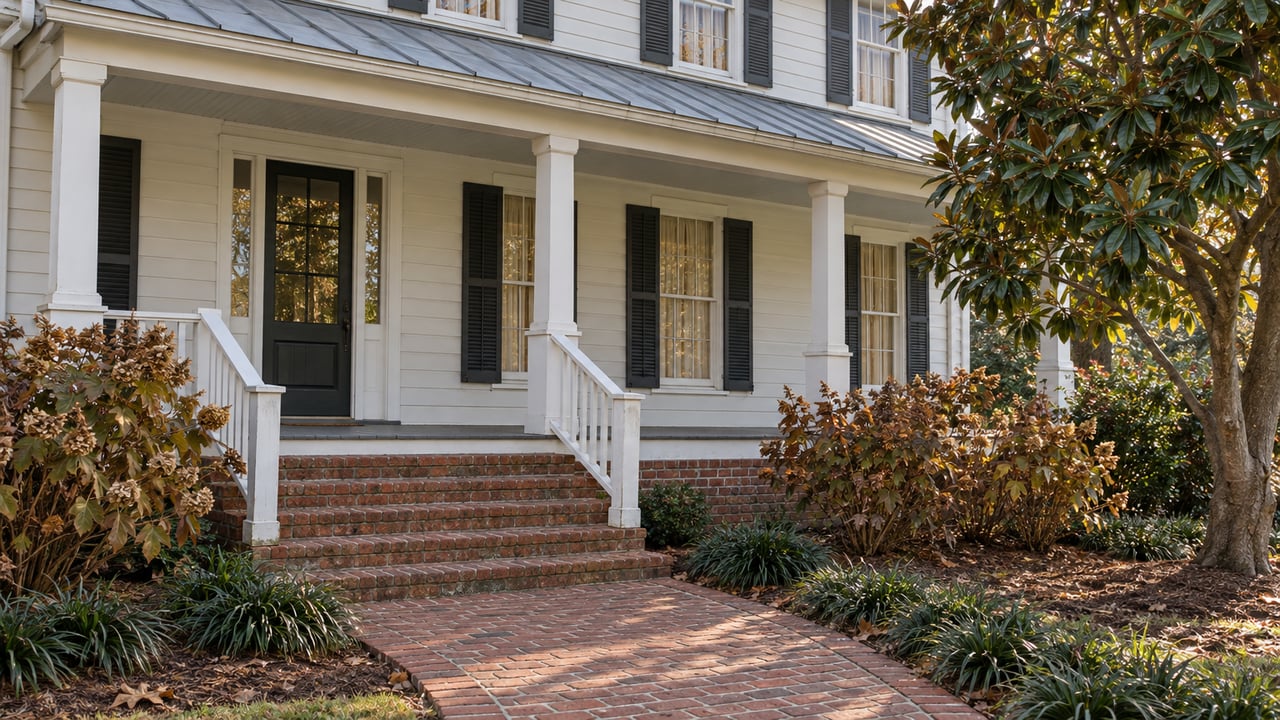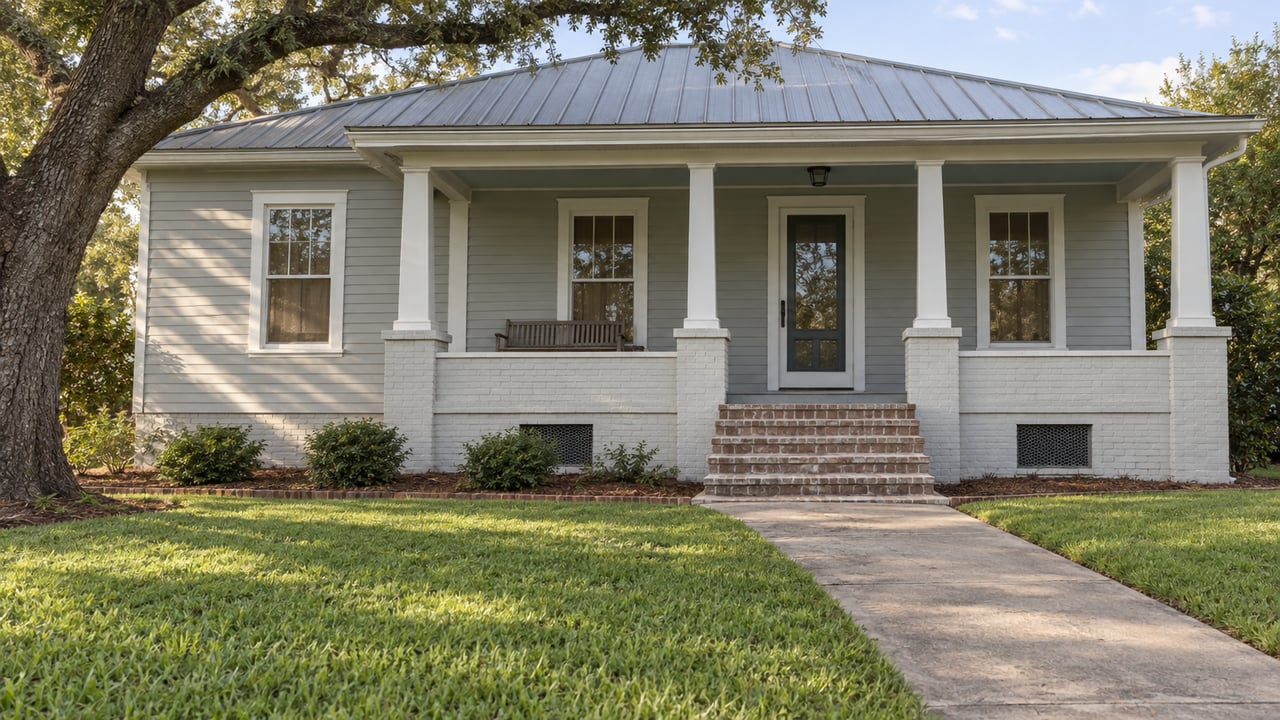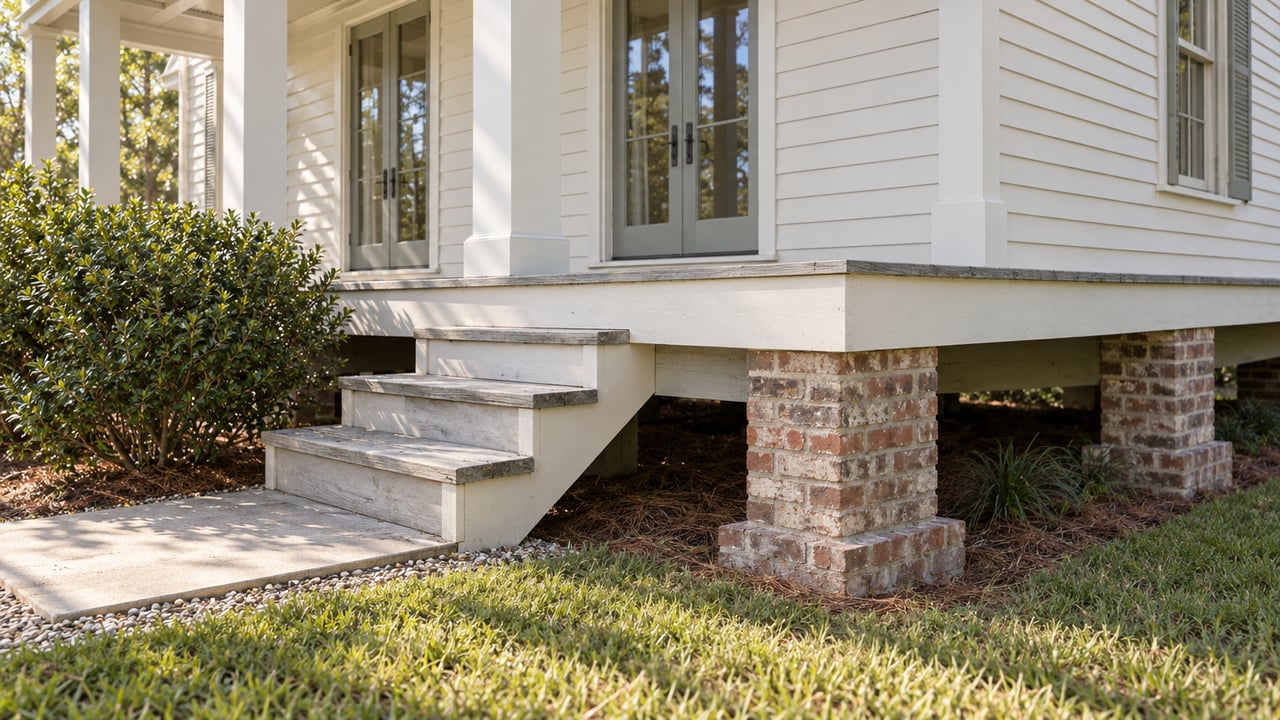
Picture two buyers touring Pass Christian on the same Saturday. One walks through a raised cottage on Scenic Drive, glass doors framing the Gulf, gulls working the surf across the road. The other checks out a brick ranch off Espy Avenue, a mile inland, close to the I-10 corridor, priced at a fraction of the beachfront listing. The natural assumption is that the inland house is the safer financial bet on insurance alone. In Pass Christian, that assumption often runs backward.
The Line That Actually Splits the Insurance Map
The real boundary in Pass Christian isn't how far a house sits from the beach. It's which side of the railroad tracks it falls on. Homes along the beach and generally south of the tracks sit inside FEMA-designated flood zones. Cross north of that line and a property may fall outside the mapped high-risk zone entirely, insurance or not.
That single geographic fact explains why two houses a few blocks apart can carry wildly different premium requirements, and why "closer to the water" is a shorthand that misses the actual mechanism. The line that matters is a set of tracks, not a distance from the shoreline.
Why the Priciest Street Can Insure Better Than the Cheap One Nearby
Here's the part that catches buyers off guard. Much of what stands today on Scenic Drive was lost to Katrina and rebuilt to modern elevation standards, often with an elevation certificate already prepared and on file. That certificate, measures a structure's lowest floor against the base flood elevation and Floods.org says it stays valid indefinitely unless the building changes. That certificate is another piece of information to consider alongside the sale price attached to either house.
Compare that to an older home tucked inland near Espy Avenue. It may sit outside the mapped high-risk zone, or it may not, but if it predates the current flood insurance rate maps and was never re-surveyed, nobody involved in the transaction actually knows its elevation relative to base flood until someone orders a new certificate. A surveyor's elevation certificate typically runs $300 to $750, and Apartment Coverage says the National Flood Insurance Program's Risk Rating 2.0 no longer requires one for most standard policies, which means plenty of older inland properties simply don't have current documentation on file. The buyer touring that Espy Avenue ranch may be assuming a lower insurance bill that nobody has actually calculated.
Put plainly: the rebuild history of a specific address tells you more about its insurance cost than its distance from the Gulf does.
What the Portals Actually Show, and Why They Disagree
Ask three different real estate portals for Pass Christian's median home price this fall and you'll get three different answers. One puts the September 2026 median list price at $464,000, or $228 per square foot, down 3 percent from a year earlier. Another shows a citywide median sale price of $365,747, up 5 percent year over year. A third narrows the lens to Downtown Pass Christian's waterfront segment specifically and finds a median list price of $529,000 across the roughly ten waterfront homes active there.
None of those numbers is wrong. They're measuring different slices of the same town: citywide list prices, citywide sale prices, and a waterfront-only subset that skews the number upward. The spread is a reminder that a single median for Pass Christian flattens a market that actually splits into distinct pockets, from Scenic Drive's post-Katrina rebuilds to the more workaday stock near the I-10 corridor to canal-front subdivisions that aren't beachfront at all.
The Submarkets Behind the Number
| Area | Typical Price Range | Flood Zone Position | Insurance Consideration |
|---|---|---|---|
| Scenic Drive Historic District | Upper six figures to multiple millions | South of the tracks, beachfront | Many structures rebuilt post-Katrina to modern elevation standards, often with a certificate already on file |
| Downtown / Harbor area | Mid-to-upper $400Ks and up for waterfront listings | Mixed, depending on exact block | Blend of full-time residents, second-home owners, and newer condo product with varying documentation |
| Near Espy Avenue / I-10 corridor | Around $250,000 and up | Often north of the tracks | Better price per square foot, but older stock may lack a current elevation certificate |
| Timber Ridge, Discovery Bay, Pass Christian Isles | Varies by lot and canal frontage | Canal or lake frontage, not open Gulf | Amenity-driven subdivisions (pools, boat launches, tennis courts) with their own flood zone nuances per lot |
The table isn't a ranking. It's a reminder that "Pass Christian" as a single search term covers at least four different cost structures, and insurance is one of the variables that moves independently of the sale price.
What This Means If You're Comparing Streets, Not Just Prices
A buyer weighing Scenic Drive against the Espy Avenue corridor is really weighing two different unknowns: land value and paper trail. The beachfront home has certainty on its side if the rebuild included a documented elevation certificate. The inland home has a lower sticker price but an insurance number that may not be settled until someone orders new paperwork.
Before comparing two Pass Christian listings on price alone, it helps to ask:
- Does this property have a current elevation certificate, and does it show the lowest floor above base flood elevation?
- Which side of the railroad tracks does the address fall on, and does that match the county's current flood zone map?
- Was this specific structure rebuilt after Katrina, or is it pre-storm construction with a more recent renovation layered on top?
- If it's in a subdivision like Timber Ridge or Discovery Bay, does the lot itself carry canal or lake frontage that triggers its own flood designation, separate from the neighborhood's general reputation?
Buyers drawn to Pass Christian tend to come from a mix of backgrounds. Some are relocating from nearby metro areas along the Gulf, some are retirees looking for a historic waterfront setting, and a smaller core are longtime residents who already know these streets well enough to skip the guesswork. Whichever group a buyer falls into, the elevation certificate question is worth asking before the price gets weighed at all, not after.
A Few Quick Answers
Does every home in Pass Christian sit in a FEMA-designated high-risk flood zone? No. The mapped high-risk zone in Pass Christian tracks closely with location south of the railroad tracks and along the beach. A property north of that line may fall outside the mapped high-risk zone.
What exactly is an elevation certificate, and do I need a new one? It's a document, that records a structure's lowest floor elevation against the base flood elevation for that zone. It's valid indefinitely unless the building is altered, so a rebuilt Scenic Drive home may already have one on file from its post-Katrina construction. An older inland home that's never been surveyed for this purpose won't have one until someone orders it, typically for $300 to $750.
Is the inland side of town actually cheaper once insurance is factored in? Sometimes. It depends entirely on the specific structure's flood zone status and documentation, not on the general reputation of the corridor. A lower purchase price near Espy Avenue doesn't automatically translate to a lower total cost of ownership if the flood insurance picture is still unknown.
Where can I check an elevation certificate or flood zone status for a specific address? The National Flood Insurance Program's elevation certificate resource explains how the document works and how to request one if a property doesn't already have one on file.
Pass Christian rewards buyers who ask about the paper trail before they ask about the view. If you're weighing a specific address here, whether it's a rebuilt cottage on Scenic Drive or a ranch house off Espy, Prosper Realty can help you find out what documentation already exists on that property and what it actually means for your insurance cost before you write an offer.
This article is general information, not legal, tax or financial advice. Consult a qualified professional about your situation.